Cognitive Development
Cognitive Development In this topic, children learn how to think more clearly, observe more deeply, reason more wisely, and understand the world with greater confidence, emotional steadiness, and mental flexibility. This topic is deeply important because a child’s emotional wellbeing is shaped not only by what they feel, but by how they think. When children struggle to observe clearly, process information accurately, or make sense of what they experience, they can become confused, reactive, insecure, overly dependent on others, or easily influenced by fear, pressure, or assumptions. Strong cognitive development helps children feel more capable, more grounded, and more confident in everyday life — from learning and problem-solving to relationships, decisions, and emotional self-management. Using a neuroscience-informed approach, this topic helps children understand how the brain processes attention, patterns, memory, reasoning, interpretation, and decision-making. They learn that the quality of their thinking can change depending on their nervous system state — for example, when they are calm and regulated, the brain is better able to observe, compare, reflect, and reason, while stress, overwhelm, anxiety, or impulsivity can narrow attention and lead to rushed conclusions, confusion, or reactive choices. This helps children understand that “thinking better” is not just about trying harder — it is also about helping the brain and body work together. Children begin to understand different ways of thinking, including observation, logical reasoning, critical thinking, forming concepts, making connections, and building understanding. They learn how to notice details, ask better questions, examine what is true versus what is assumed, and understand that thoughts are not always facts. They also begin to recognize how emotions can influence interpretation — such as how fear can create false conclusions, frustration can block flexible thinking, or insecurity can make them doubt their own understanding. This gives children a more mature relationship with both their mind and their emotions. This topic is taught through highly engaging and developmentally appropriate experiences such as observation games, logic-based activities, guided questioning, pattern recognition tasks, reflective discussions, real-life scenarios, problem-solving exercises, concept-building activities, and role play that helps children practice thinking through situations rather than reacting automatically. Children are not simply given information — they are guided to discover, compare, test, reflect, and understand, which strengthens both learning and self-trust. A powerful part of this topic is that it reduces shame, confusion, and self-doubt. Many children begin to believe they are “not smart enough,” “too slow,” “always wrong,” or “bad at understanding things” when they struggle to think clearly under pressure or when they compare themselves to others. In this work, children learn that clear thinking is a skill that develops over time, and that many thinking difficulties are influenced by stress, overstimulation, self-pressure, or emotional dysregulation — not lack of intelligence. This helps them replace self-criticism with curiosity, patience, and confidence. Importantly, this is not just about intellectual skills. Children are given brain-based training that helps them regulate their nervous system so their thinking can become more organized, focused, and effective. They learn how to slow down when overwhelmed, settle their body before solving a problem, pause before making assumptions, and return to a calmer mental state when confusion or frustration starts to take over. This allows children to access stronger reasoning, better memory, and clearer understanding in real-life situations. Children also leave with practical tools they can use every day: strategies for slowing down and observing before reacting, simple self-talk for reducing mental pressure, ways to check if a thought is true or just a feeling, question prompts that improve reasoning, methods for breaking problems into smaller steps, and calming techniques that support clearer focus and better decisions. These tools strengthen school readiness, emotional resilience, social judgment, and everyday confidence. By the end of this topic, children become more thoughtful, observant, and mentally confident. They learn how to think with greater clarity, understand more deeply, and respond to challenges with stronger reasoning rather than confusion or impulsivity. This is not just about helping children “do better in school” — it is about building the cognitive and emotional foundation for wiser decisions, stronger self-trust, and lifelong learning.
Tags
Chapters
5 Chapters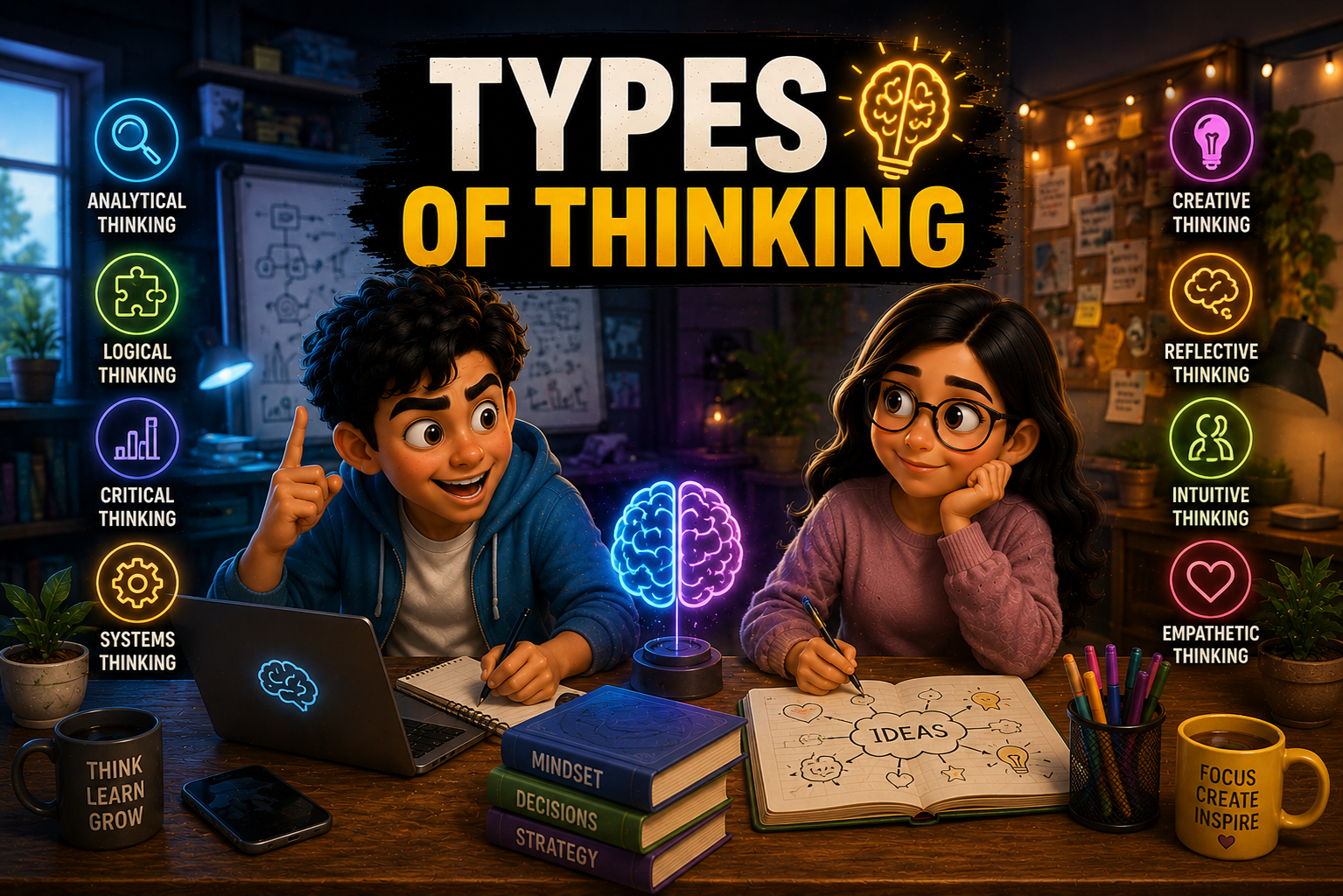
Types of Thinking
Do you solve every problem in the same way?
Have you ever wondered why...
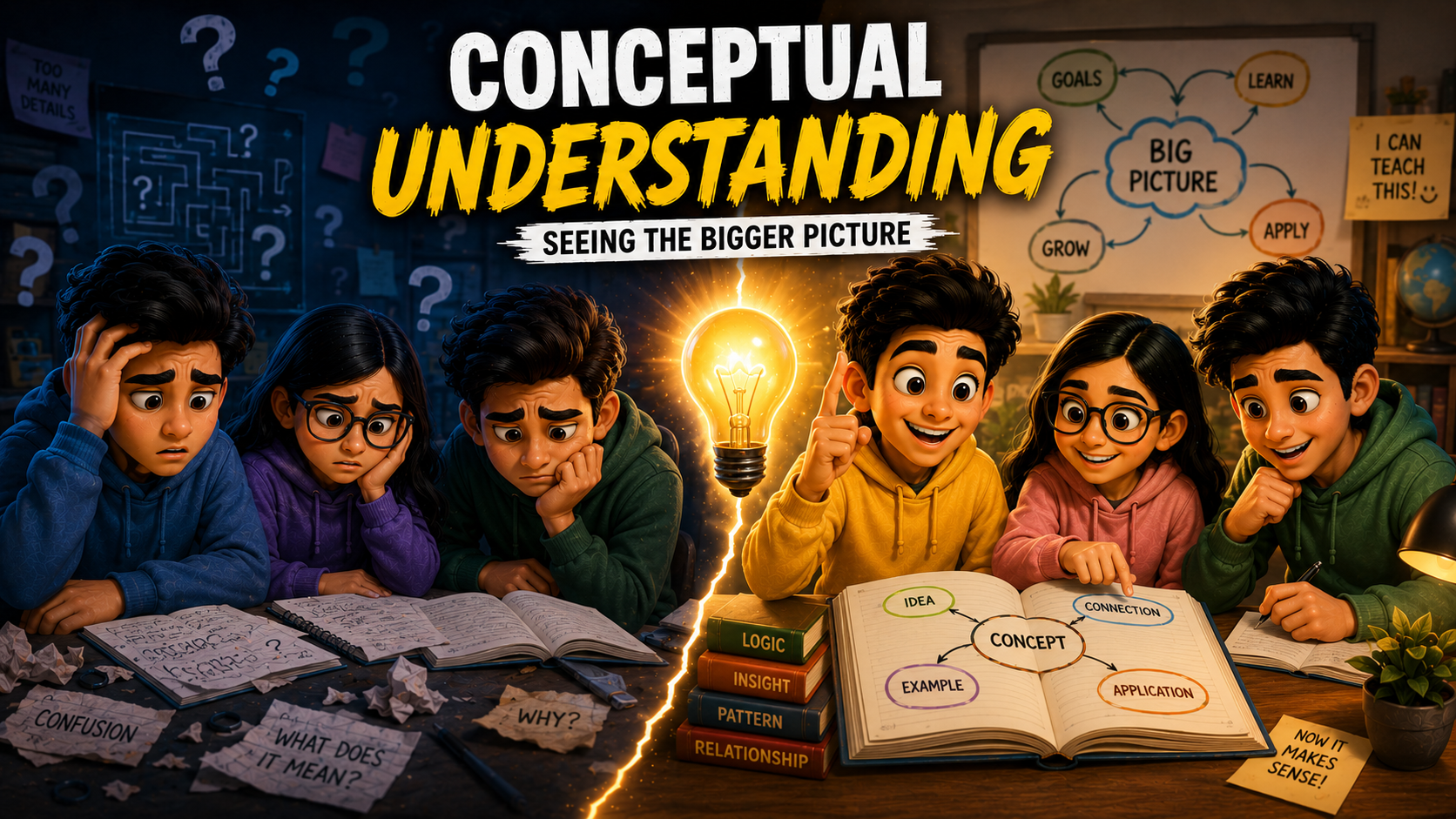
Conceptual Understanding
Do you ever memorize something for a test and forget it soon after?
Hav...
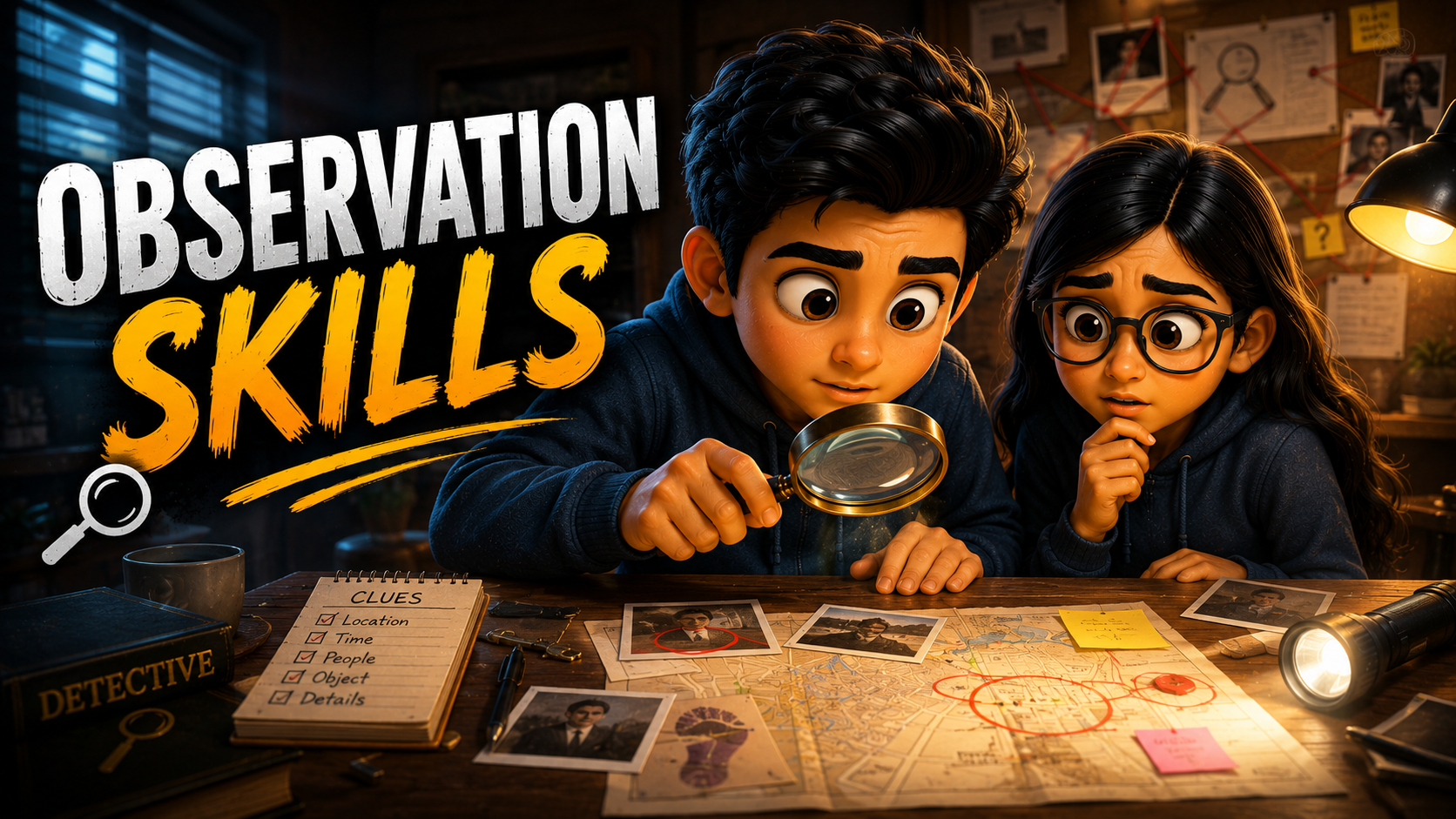
Observational Skills
Do you often miss important details in class?
Have you ever lost someth...
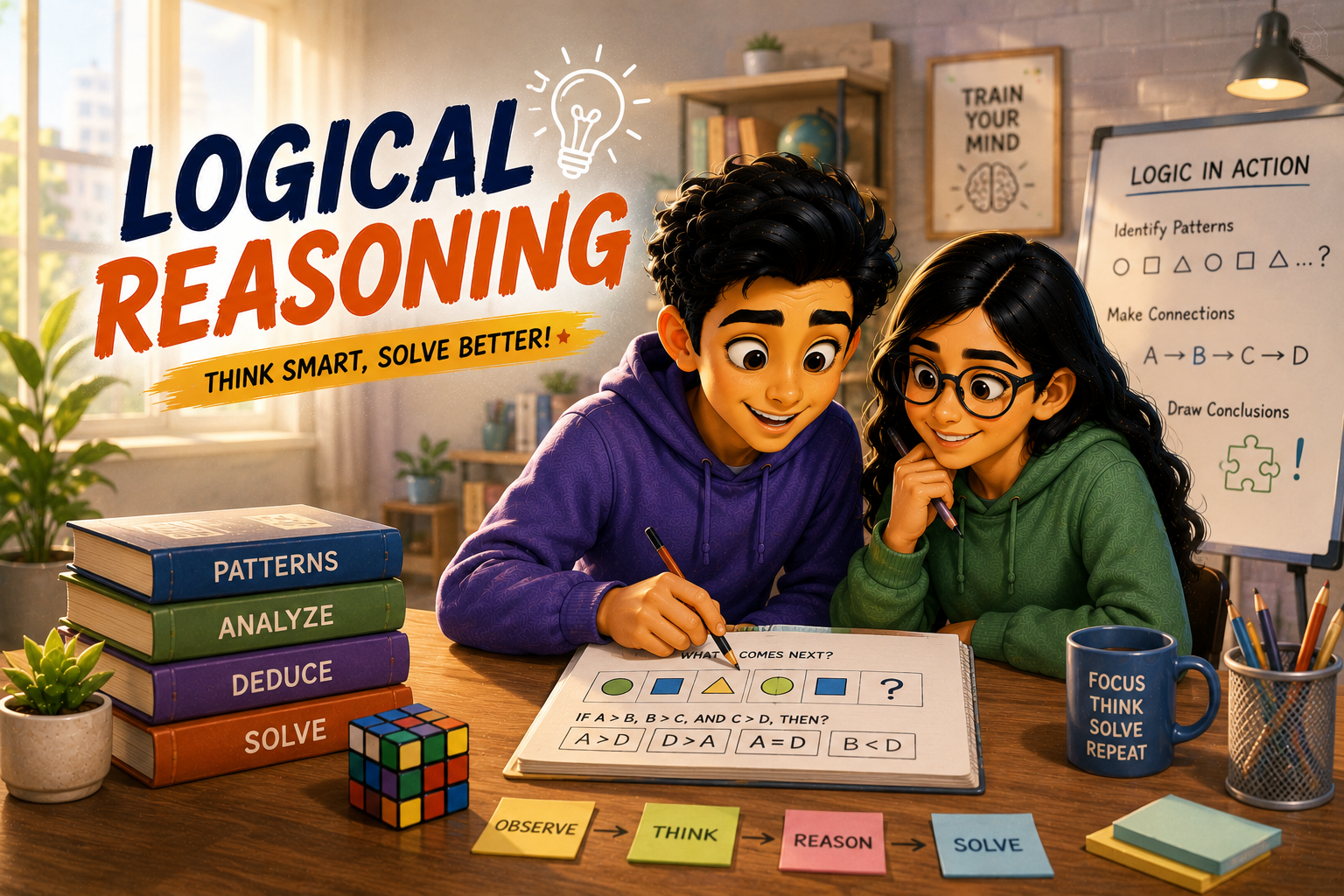
Logical Reasoning
Do you sometimes struggle to figure out the best solution to a problem?
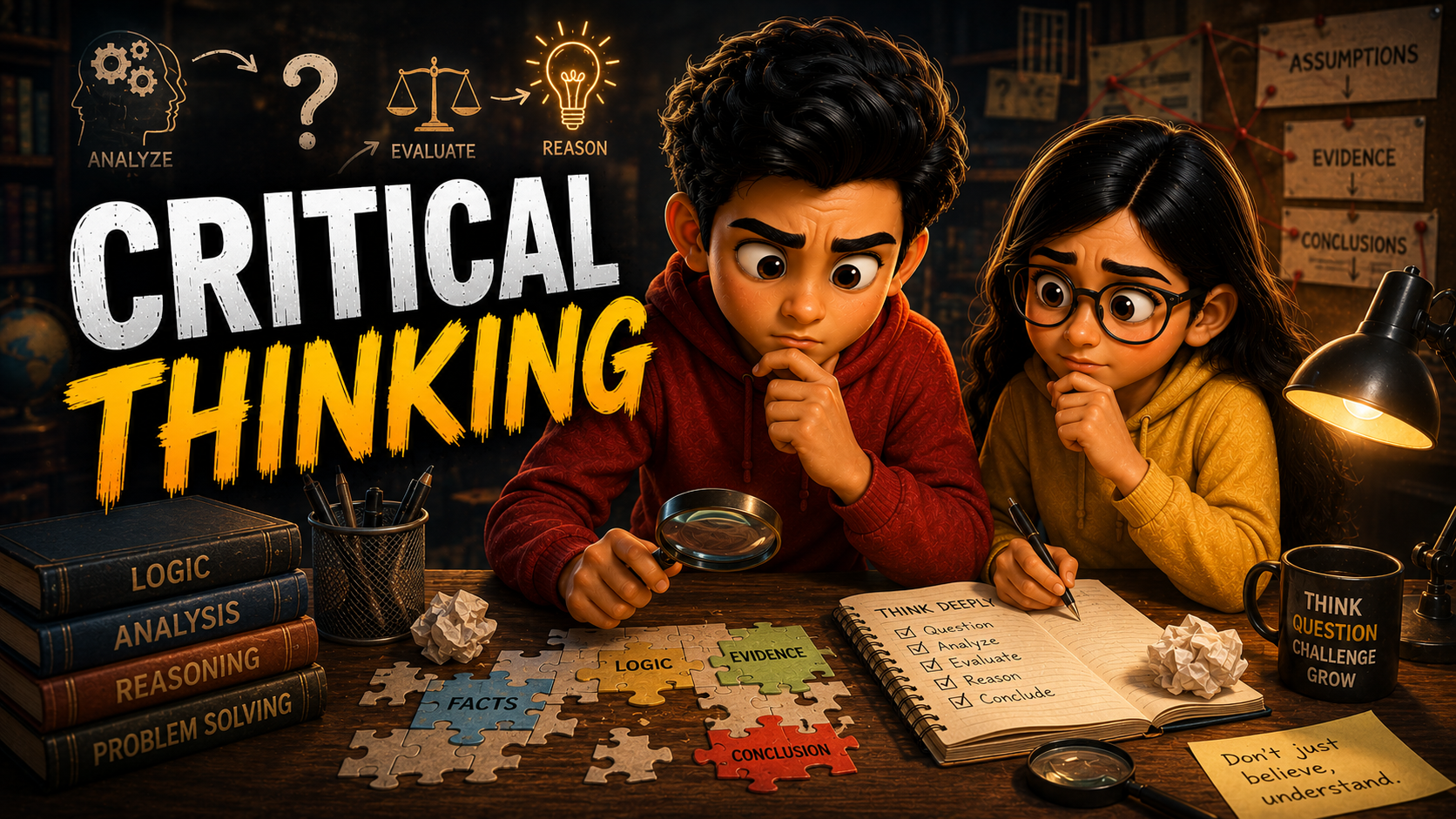
Critical Thinking
Do you believe everything you hear, read, or see online?
Have you ever...
Enroll in Cognitive Development
Get full access to live lectures, chapter notes, and expert instructors.