Digital Brain & Screen Self-Control
Digital Brain & Screen Self-Control In this topic, children learn how digital environments, screens, algorithms, and online experiences can quietly shape their attention, emotions, identity, behavior, and sense of reality — and how to build the self-awareness and self-control needed to stay emotionally healthy in a highly stimulating digital world. This topic is deeply important because today’s children are not simply “using screens” — they are growing up inside environments that are designed to capture attention, influence desire, shape self-image, distort reality, and encourage repeated consumption. Without the right guidance, children can begin to experience rising emotional volatility, lower frustration tolerance, fragmented attention, dependency on stimulation, comparison-based insecurity, identity confusion, and difficulty staying calm, focused, or connected in offline life. What often looks like “bad behavior,” low motivation, mood swings, or poor concentration may actually be the nervous system responding to overstimulation and digital overload. Using a neuroscience-informed approach, this topic helps children understand how the brain and body respond to constant digital input. They learn how fast rewards, endless scrolling, social comparison, notifications, visual intensity, and emotionally charged content can affect dopamine, attention, impulse control, emotional regulation, and nervous system balance. Children begin to understand why screens can make them feel restless, reactive, numb, overstimulated, distracted, or emotionally dependent — and why this is not a personal weakness, but a brain-body pattern that can be understood and changed. Children are guided to understand how digital experiences influence their thoughts, emotions, and behavior. They explore how online content can create “received reality” — where what they repeatedly consume starts to feel like truth — and how this can shape beliefs about themselves, others, success, beauty, popularity, safety, and belonging. They also learn how identity can become externally driven when likes, trends, reactions, or online personas begin to matter more than inner values and real-life self-connection. This helps children make sense of why they may sometimes feel emotionally unsettled, overly reactive, constantly pulled back to devices, or disconnected from their real needs. This topic is taught through engaging, age-appropriate experiences such as screen pattern mapping, emotional reflection activities, role play, real-life digital scenarios, nervous system awareness exercises, “pause before click” practices, media influence decoding, identity reflection, and guided discussions that help children notice how digital habits affect their mood, body, focus, and choices. Rather than using fear, blame, or rigid restriction, children are taught to become calm observers of their own patterns so they can build healthier control from the inside out. A powerful part of this topic is that it reduces shame, confusion, and self-blame. Many children quietly believe they are “addicted,” “lazy,” “out of control,” “too distracted,” or “bad at focusing” when they struggle to step away from screens, regulate emotions after device use, or stay engaged in slower real-life tasks. In this work, they learn that many of these challenges are the result of overstimulated reward systems, fragmented attention, emotional triggers, and nervous system conditioning — not a lack of discipline or character. This understanding creates relief, self-awareness, and a much healthier foundation for change. Importantly, this is not just about limiting screen time. Children receive brain-based training that helps them regulate their nervous system before, during, and after digital exposure. They learn how to notice activation in the body, recognize emotional triggers that drive digital consumption, interrupt automatic reaching for stimulation, recover from digital overload, and rebuild tolerance for calm, boredom, focus, and real-world presence. Through body-based regulation practices, sensory resets, attention recovery tools, and emotional grounding, they develop the internal capacity to use technology without being controlled by it. Children also leave with practical tools they can use in daily life: calming strategies for urges and overstimulation, self-talk for breaking compulsive screen loops, simple ways to reset attention after fragmented consumption, stronger boundaries around emotionally activating content, techniques for protecting identity from comparison and external validation, routines that support healthier screen transitions, and skills for choosing what they consume with greater awareness. These tools help children become more focused, emotionally steady, self-directed, and resilient in both digital and offline life. By the end of this topic, children develop a healthier relationship with screens, stronger control over their attention, and greater protection over their emotional world and sense of self. They become better able to recognize digital influence, regulate emotional reactivity, reduce dependency on constant stimulation, and stay connected to who they truly are in a world that constantly tries to shape them. This is not just about managing devices — it is about protecting the child’s brain, identity, attention, and emotional wellbeing in the environment they now live in every day.
Tags
Instructors
View AllChapters
8 Chapters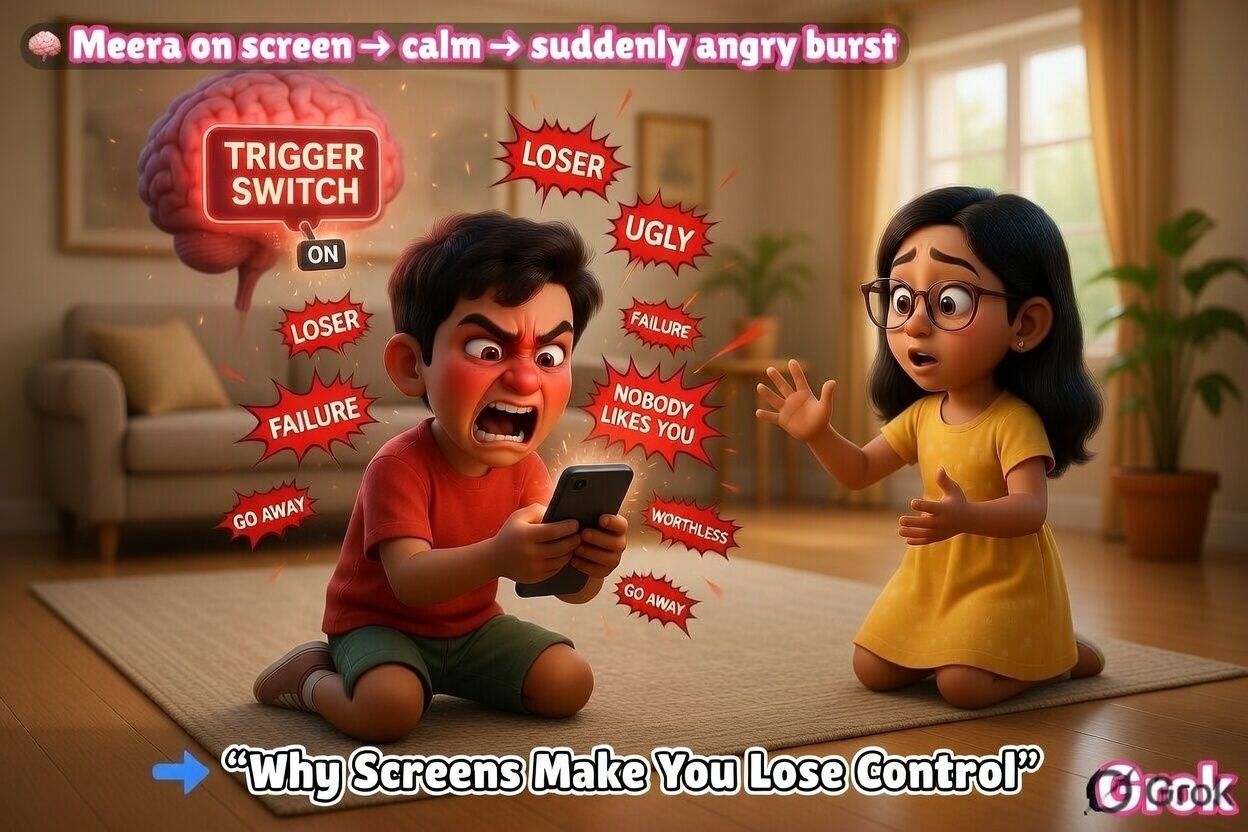
Emotional Volatility Triggers
Do you get upset over small things sometimes?
Do your feelings change q...

Digital Illusion
Do you ever think everyone else's life looks more exciting online?
Have...
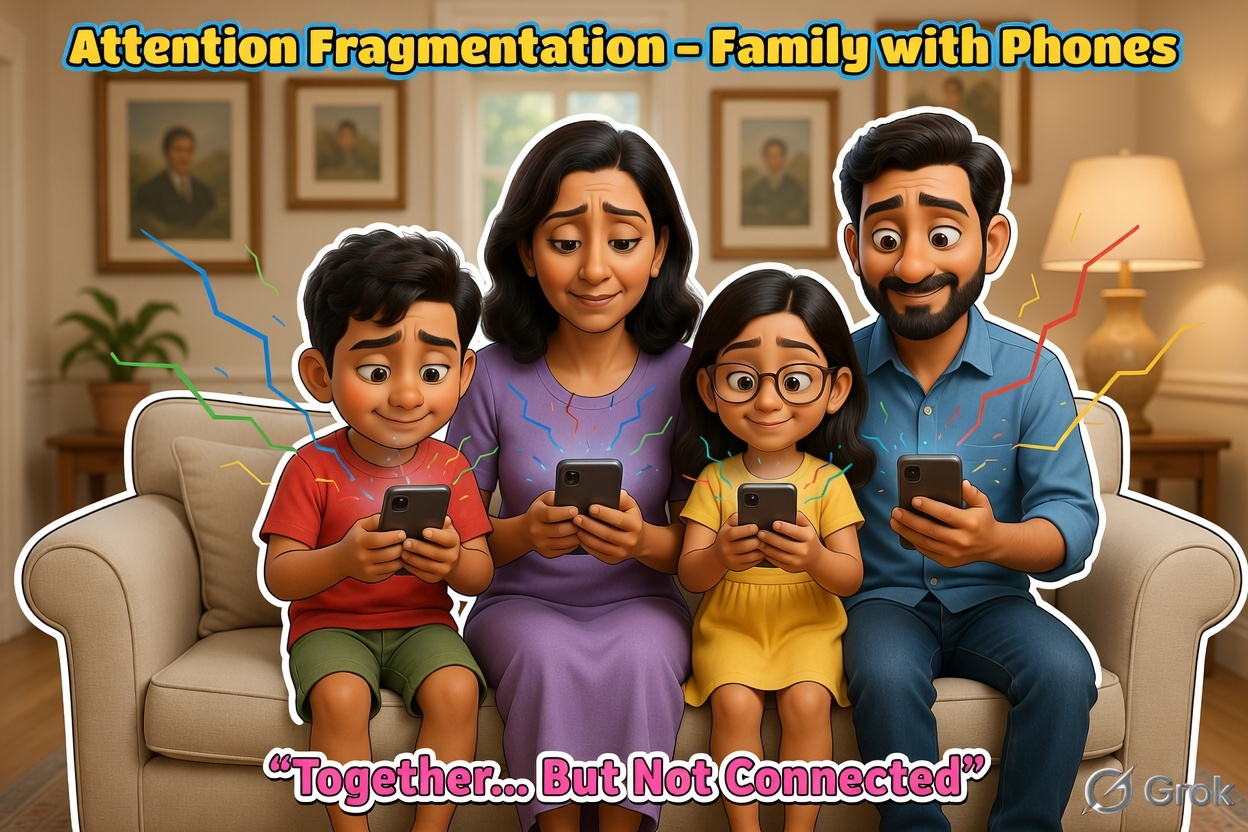
Attention Fragmentation
Do you start one task and then quickly switch to something else?
Do not...

Perceived Reality Distortion
Do you ever think a small problem is much bigger than it really is?
Hav...
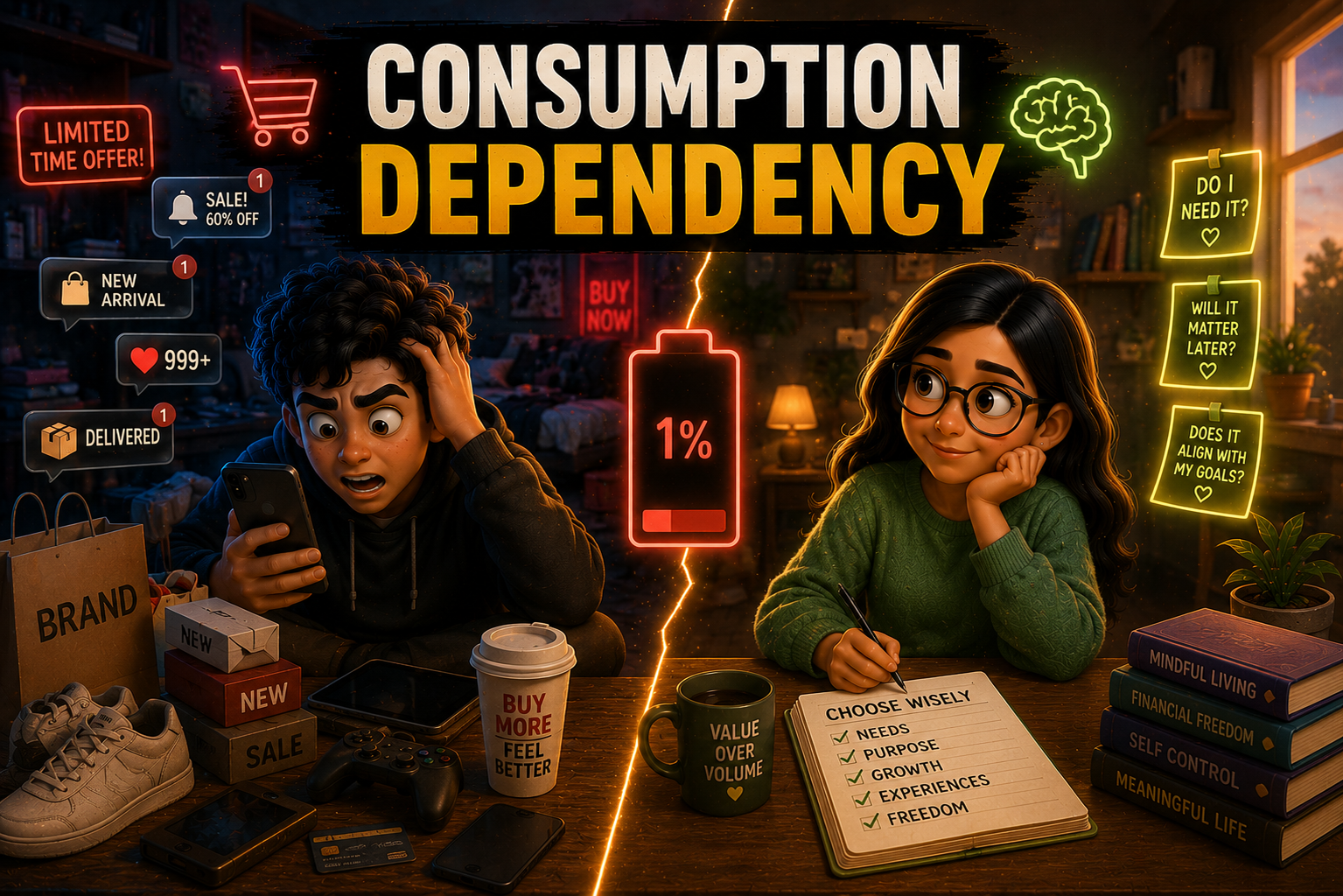
Consumption Dependency
Do you always feel like you need the newest toy, game, or gadget?
Do ad...

Identity Exposure
Do you share photos, videos, or personal details online?
Have you ever...
Cyberbullying
Have you ever received a mean message online?
Has someone posted someth...

Beyond the Screen
Do you spend more time on screens than playing outdoors?
Do you find it...
Enroll in Digital Brain & Screen Self-Control
Get full access to live lectures, chapter notes, and expert instructors.