Emotional Intelligence & Social Awareness
Topic: Emotional Intelligence & Social Awareness In this topic, children learn how to understand hidden social dynamics, recognize emotional and social influence, and protect their confidence in situations where pressure, comparison, exclusion, or subtle manipulation may affect how they think, feel, and behave. This topic is deeply important because many children are impacted not only by what people say openly, but by what happens underneath the surface — tone changes, withdrawal, exclusion, comparison, selective attention, performative kindness, peer pressure, approval-seeking, social status cues, and subtle behaviors that can shape confidence, insecurity, and belonging. Without guidance, children may absorb these experiences personally, blame themselves, or change who they are in order to feel accepted, included, or “enough.” Using a neuroscience-informed approach, this topic helps children understand how the brain and body respond to social approval, rejection, comparison, uncertainty, and hidden social pressure. They learn that even subtle changes in facial expression, body language, attention, or group behavior can activate the nervous system and create emotional responses such as anxiety, self-doubt, people-pleasing, overthinking, shutdown, or reactive behavior. This helps children understand that social pain is real, that their reactions make sense, and that awareness can protect them. Children begin to understand the connection between social experiences, internal thoughts, emotional reactions, and outward behavior. They learn how to notice when someone’s behavior creates confusion, insecurity, pressure, or emotional imbalance. They explore how cognitive withdrawal, selective engagement, comparison, “gifting” for influence, performative closeness, emotional deactivation, social overhead, and status-based behavior can quietly affect how they see themselves and how they act around others. Most importantly, they learn how to observe these patterns clearly without becoming fearful, cynical, or overly suspicious. This topic is taught through carefully guided and age-appropriate methods such as social scenario role play, emotional signal decoding, body-language awareness activities, reflection exercises, group discussions, comparison mapping, boundary practice, and real-life examples that help children understand what healthy connection feels like versus what emotionally confusing or imbalanced social interactions can look like. Children are not taught to judge others harshly — they are taught to notice patterns, trust their internal signals, and respond with calm awareness. A powerful part of this topic is that it reduces shame, self-blame, and confusion. Many children assume that if someone pulls away, excludes them, ignores them, compares them, or makes them feel small, it must mean they are not good enough. Others become overly eager to please, overperform, or constantly seek validation. In this work, children learn that many social dynamics are influenced by insecurity, emotional immaturity, social hierarchy, and nervous system patterns in others — not simply by their worth. This helps them stop internalizing every social experience as a reflection of who they are. Importantly, this is not just social advice. Children receive brain-based training that helps them stay regulated in emotionally loaded social situations. They learn how to notice body cues when they feel left out, pressured, confused, overly attached, jealous, or emotionally activated. They practice grounding their nervous system before reacting, pausing before people-pleasing, calming comparison spirals, and returning to a more centered state when social interactions trigger insecurity or emotional overwhelm. This builds true emotional resilience and protects them from being easily pulled by unhealthy dynamics. Children also leave with practical tools they can use in daily life: self-talk that protects self-worth during comparison, calming strategies when they feel excluded or socially activated, ways to recognize hidden pressure or influence, language for healthy boundaries, tools for stepping back from confusing interactions, strategies for reading social signals more clearly, and simple ways to choose friendships and group spaces that feel safe, mutual, and respectful. These tools support stronger confidence, healthier friendships, wiser decisions, and a more stable sense of identity. By the end of this topic, children become more socially aware, emotionally protected, and internally secure. They learn how to recognize hidden social patterns without becoming fearful, how to stay grounded when comparison or exclusion appears, and how to protect their self-worth in relationships that may otherwise create confusion or insecurity. This is not just about social skills — it is about helping children build the emotional intelligence, discernment, and inner stability they need to navigate the social world with clarity, confidence, and strength.
Tags
Instructors
View AllChapters
6 Chapters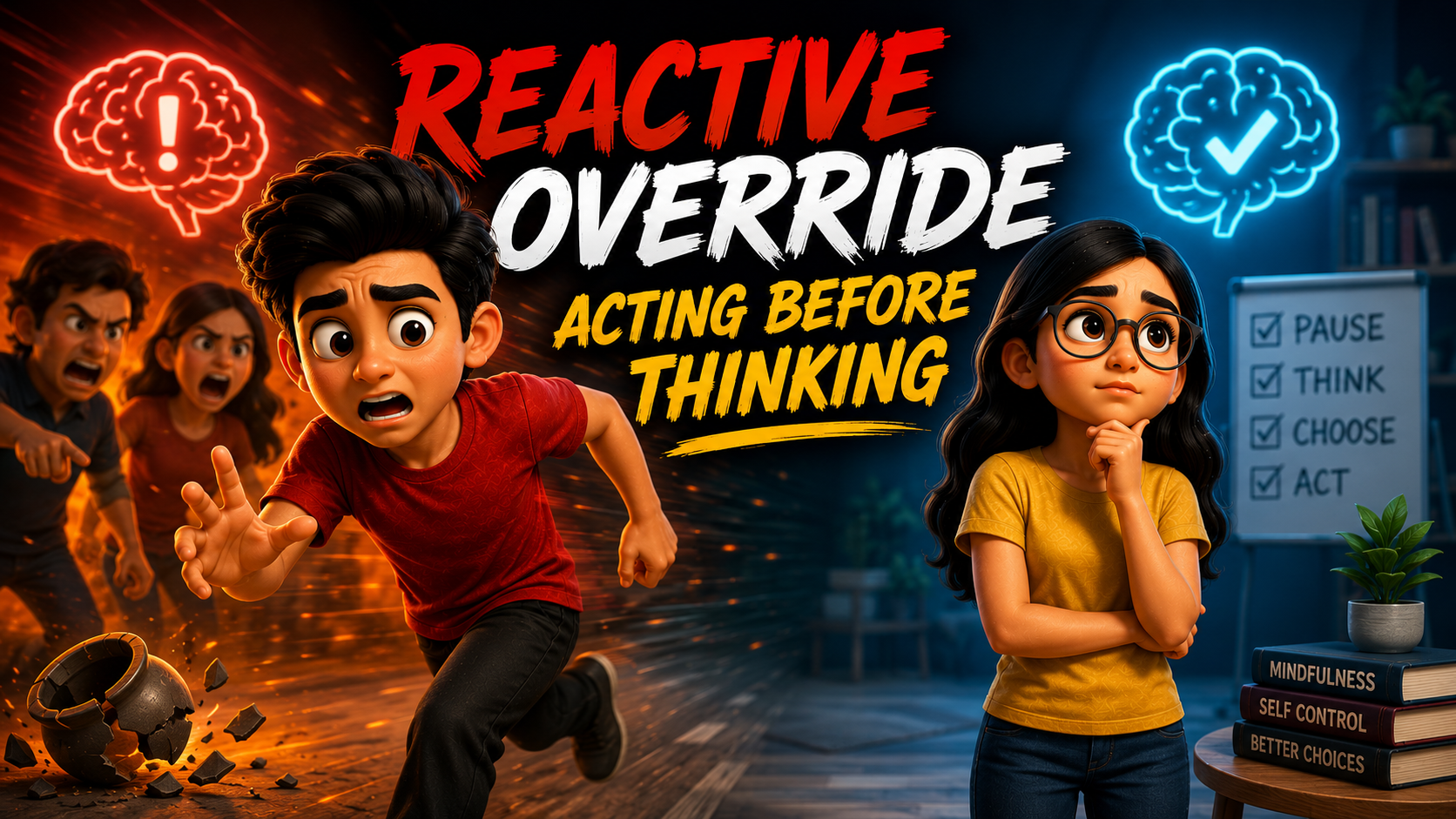
Reactive Override — Acting Before Thinking
Why do some children shout when they are angry?
Why do they sometimes s...

Comparative Insecurity — Self-Worth Defined by Others
Do you feel upset when a friend gets better marks than you?
Do you wish...

Perceived Threat Loop — Expecting What Isn’t There
Do you sometimes think your friends are upset with you when they aren't?
<...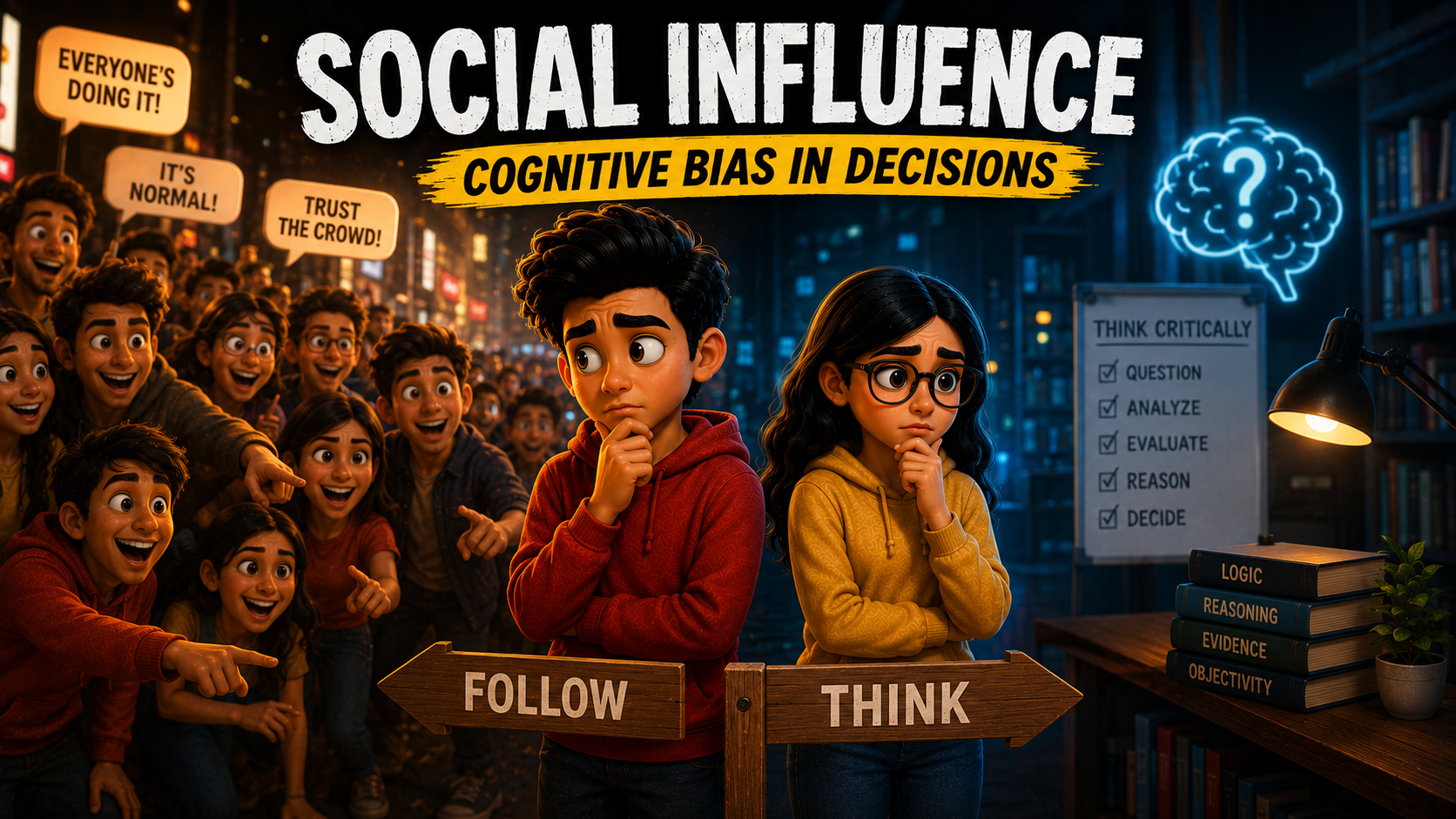
Social Influence — Cognitive Bias in Decisions
Have you ever joined in just because everyone else was doing it?
Have y...

Disengagement Drift — Losing Connection Gradually
Do you spend less time talking with your family than you used to?
Do yo...
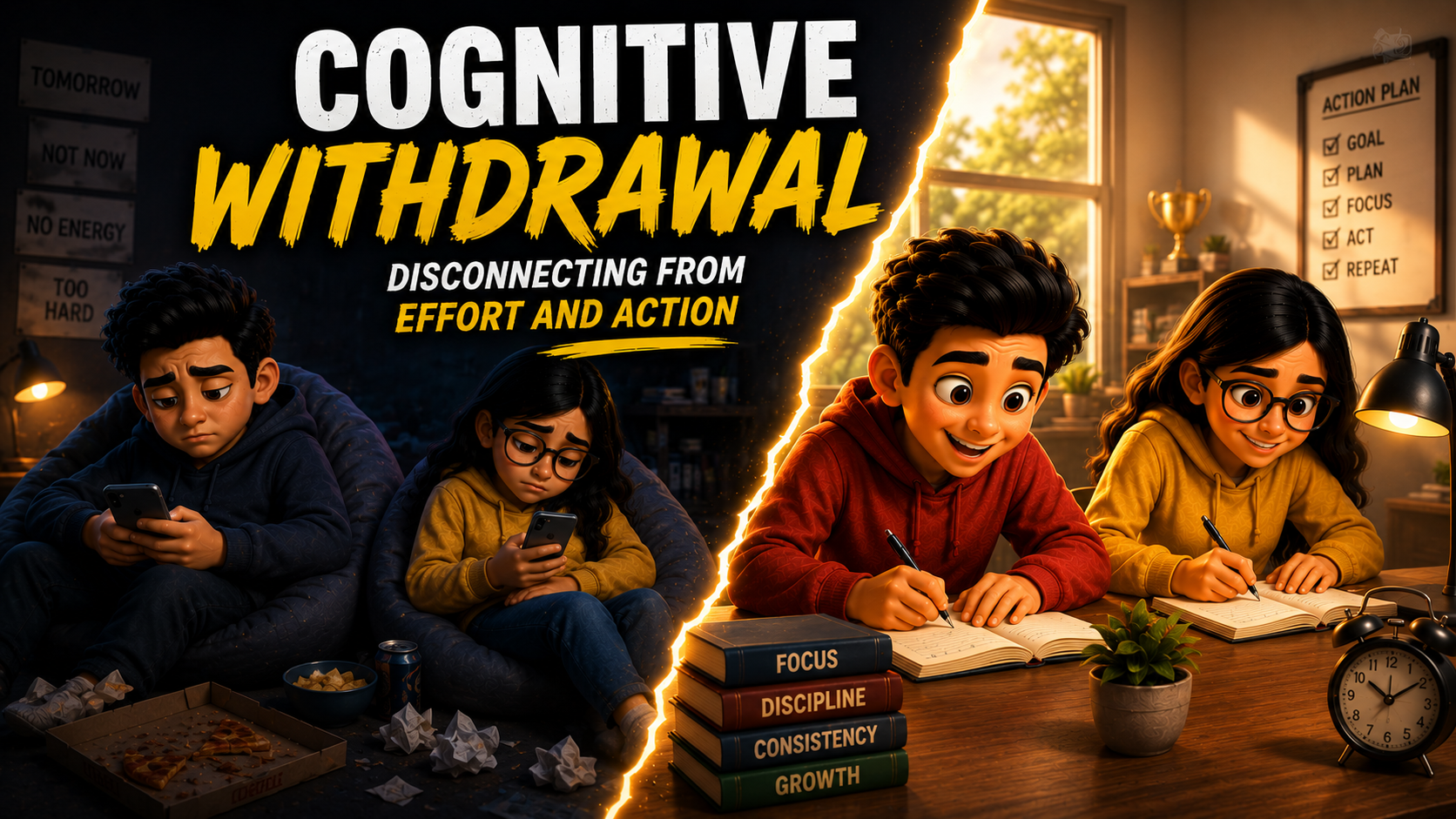
Cognitive Withdrawal — Disconnecting from Effort and Action
Do you give up when something feels too difficult?
Do you avoid trying...
Enroll in Emotional Intelligence & Social Awareness
Get full access to live lectures, chapter notes, and expert instructors.